
Understanding Homebirth
Homebirth is more than birth that happens to take place at home.
It is a model of maternity care built around continuity, individualized assessment, shared decision-making, and a deep respect for the normal physiology of pregnancy, birth, and postpartum.
Like every model of care, it has both strengths and limitations. It is not the right choice for every woman or every pregnancy. For carefully selected families, however, it offers a different way of experiencing pregnancy and birth, one that emphasizes relationship, thoughtful care, and the understanding that birth is both a physiologic process and one of life's most significant transitions.
Choosing where to give birth is rarely just about location. It is also about the kind of care a family hopes to receive throughout pregnancy, birth, and postpartum.
Why Families Choose Homebirth
Families choose homebirth for many different reasons.
Some are looking for greater continuity with the same provider throughout pregnancy, labor, birth, and postpartum. Others value longer appointments, more time for questions, and the opportunity to build a relationship with someone who comes to understand not only their pregnancy, but also their goals, concerns, and priorities.
Some hope to avoid unnecessary interventions. Others simply feel more comfortable laboring in familiar surroundings with the people they have intentionally invited into their birth space.
Many are looking for a model of care that allows time for conversation, individualized recommendations, and meaningful participation in decisions throughout pregnancy and birth.
Previous birth experiences, religious or cultural values, family dynamics, personal preferences, and individual health considerations can all influence the decision.
There is no single "right" reason to choose homebirth, and no single path that brings families to it.
Understanding Physiologic Birth
For most women, pregnancy, labor, birth, and postpartum are normal physiologic processes.
Midwifery has traditionally been rooted in understanding how those processes unfold and how to support them while remaining attentive to the times when additional care becomes necessary.
Respecting physiology does not mean assuming birth is always uncomplicated.
It means understanding what is expected, recognizing normal variation, and identifying when something is no longer following its expected course.
Supporting physiologic birth is not the absence of care.
It is thoughtful, attentive care that seeks to understand what the body is doing and respond accordingly.
Safety and Physiology
Physiology and safety are sometimes spoken about as though they compete with one another.
In reality, they are closely connected.
Understanding normal physiology helps providers recognize when something begins to change. It provides the context needed to distinguish between normal variation and situations that require additional evaluation, treatment, consultation, or transfer.
Safety is not created by ignoring problems.
Nor is it created by assuming every variation is a problem.
It comes from thoughtful assessment, ongoing observation, sound clinical judgment, and responding appropriately as new information becomes available.
How Homebirth Midwives Prepare for Emergencies
One of the most common misconceptions about homebirth is that it relies on simply hoping everything goes well.
In reality, planned homebirth is built on preparation.
Community midwives are not simply hospital providers working in a different building. They are trained specifically for community birth. Their education emphasizes supporting normal physiologic birth, recognizing complications early, managing emergencies that arise in the home, and knowing when consultation or transfer is appropriate.
Midwives are trained to recognize when pregnancy or labor is no longer unfolding normally and to manage many of the urgent situations that can arise in the home setting. They carry oxygen, intravenous fluids, medications for postpartum hemorrhage, newborn resuscitation equipment, and other supplies needed to care for mothers and babies while additional resources are arranged if needed. Ongoing emergency skills training and regular rehearsal are also an important part of community midwifery practice.
Not every complication can or should be managed at home. Some situations require resources that only a hospital can provide. Recognizing those situations early, and making recommendations before they become emergencies whenever possible, is an important part of safe homebirth care.
Understanding the Tradeoffs
Every birth setting has strengths.
Every birth setting has limitations.
Every model of care involves tradeoffs.
Hospitals offer immediate access to operating rooms, blood products, advanced imaging, specialists, and intensive care resources should they become necessary. Those resources save lives, and there are situations where they are exactly what a mother or baby needs.
Homebirth offers a different model of care with its own strengths. Families often experience greater continuity with their provider, more time for conversation, fewer routine interruptions, and care that is individualized to the woman rather than built around the routines of a busy unit.
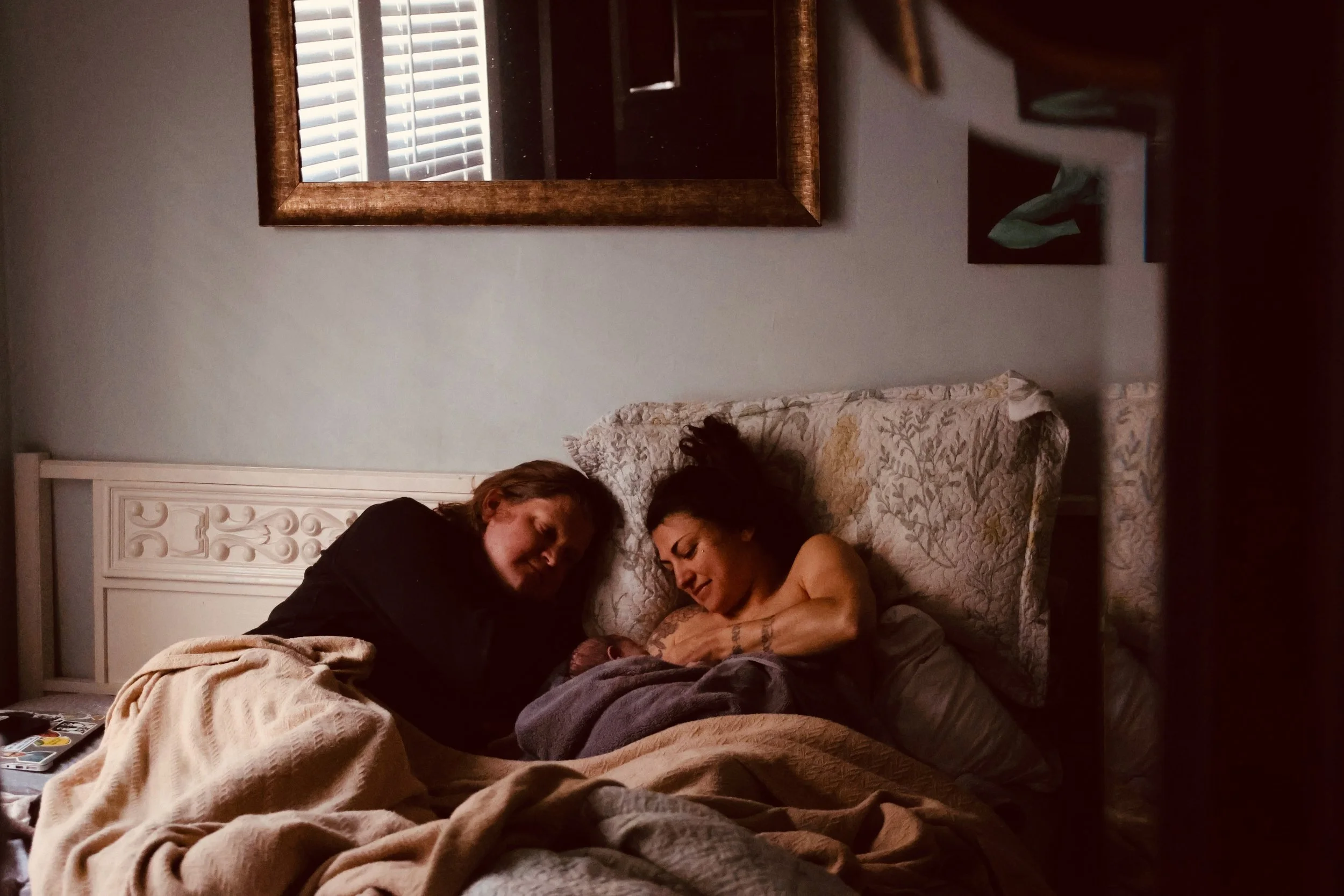
Many families also value protecting the first moments after birth. When mother and baby are doing well, the first hour can often unfold quietly with uninterrupted skin-to-skin contact, early breastfeeding, and time for parents and baby to simply become acquainted with one another.
Some families hope to welcome their own baby into their hands. Others prefer the midwife to receive the baby. Some desire a quieter environment with fewer people coming and going. Others appreciate having the time to understand recommendations, explore the reasoning behind them, and participate meaningfully in decisions throughout pregnancy and labor.
Hospital obstetricians and community midwives also receive different training because they serve different roles. Obstetricians are specialists in pregnancy complications and surgery. Community midwives are specialists in supporting healthy pregnancies, physiologic birth, and recognizing when a pregnancy or labor is moving beyond the scope of community birth.
Neither model is designed to do exactly the same thing.
Understanding those differences helps families make decisions that reflect not only where they want to give birth, but how they want to experience their care.
When Circumstances Change
No matter where a woman plans to give birth, pregnancy and labor can take unexpected turns.
One of the responsibilities of a midwife is to continually assess how things are unfolding and recognize when a different level of care would better serve the mother or baby.
Sometimes that means additional monitoring. Sometimes it means consulting another provider. Sometimes it means recommending that labor or birth continue in the hospital.
The goal is not to wait until a situation becomes an emergency. Whenever possible, the goal is to recognize when the picture is changing early enough that families have time, options, and access to the resources they need.
Planning a homebirth also means planning for the possibility that circumstances could change. A thoughtful transfer plan is part of safe homebirth care, not separate from it.
Shared Decision-Making
Pregnancy and birth involve decisions that are both medical and deeply personal.
Providers bring clinical knowledge, experience, and ongoing assessment.
Families bring their own values, priorities, beliefs, lived experiences, and understanding of what matters most for themselves and their children.
Good care makes room for both.
Rather than simply being told what to do, many families want the opportunity to understand the reasoning behind recommendations, ask questions, discuss alternatives when appropriate, and consider how different options align with their own values and circumstances.
That doesn't always mean there is one clear answer. Pregnancy and birth are full of nuance, and recommendations often depend on the whole picture rather than a single diagnosis or guideline.
Shared decision-making is not about asking families to make medical decisions without guidance. Nor is it about expecting them to follow recommendations without understanding them. It is about bringing clinical expertise and individual values together with honesty, transparency, and mutual respect.
Is Homebirth Right for Everyone?
No.
Homebirth is not appropriate for every woman or every pregnancy, and that may change as pregnancy unfolds.
Some families begin pregnancy planning a homebirth and later decide another setting better meets their needs. Others begin planning a hospital birth and later discover that homebirth is an appropriate option.
Recommendations should never be based on diagnosis alone. They should consider the whole picture, including the health of the mother and baby, the details of the pregnancy, the available resources, the experience of the care team, and the values and priorities of the family.
The goal is not simply to have a homebirth.
The goal is to help each family choose the setting and model of care that best fits their pregnancy, while supporting the health, safety, and dignity of both mother and baby.